Etiquetas

lunes, 19 de enero de 2015

Next stage: DICTATION !


Now we are dealing with dictations, which is another branch of the Listening field. Here you will find a recording with the dictation, called "A Picnic by the River". It is recorded in a clear and natural tone, so it won't be difficult for you to follow and understand it. 

Normally, in doing it, you should play it 3 times: the first one just simply to listen what the story is about, the second one in order to write it paying attention, and the last one to revise what you have written and if you have made mistakes, correct them.

Then, you can check your dictation with the one given below and correct yourself your dictation. One point off per each mistake. Maximum of mistakes: 15 

____________________________________________________________________

(Solution)
A Picnic by the River 


WHITNEY: This is a good spot. Let's stop and have our picnic next to the river.   
MATHEW: Good idea! Walking always makes me hungry. I'm ready for lunch. 
W: We can sit here on the grass. Oh no ! Someone forgot to throw these empty paper bags away. There is litter everywhere !
M: Why do people always leave litter around? It's not a nice thing to do. It spoils other people's picnics. 
W: I think they are lazy. Or maybe they just don't care. Look, there are some empty cans and glass bottles under that tree, too. 
M: People should clean up before they leave and not leave litter lying around. 
W: That's right. Well, after our picnic, let's pick up all the litter we can and take it out of here. 
M: OK! And next week, let's come back with friends and pick up some more.  
W: Good idea ! 

Grammar: Phrasal verbs

We're going to summary some of the most common phrasal verbs:

BELIEVE IN
1. When you believe in something or somebody you are sure that
something or somebody exists.
Examples of use:
a) Do you believe in God?
b) I didn't believe in ghosts until I stayed in an old castle in Romania: now
I'm certain they exist.
c) My children still believe in fairies.

CHECK IN
1. To check in is to show your ticket at an airport so that the airline knows
you have arrived, and they can put your bags on the aircraft.
Examples of use:
a) We have to check in at 8 o'clock.
b) Please check in at least one hour before your flight leaves.
The check-in (noun) is the place at the airport where you show your ticket
and let the airline know that you have arrived.

FALL OUT
1. To fall out with someone is to become upset or angry with them, and
stop being friendly with them.
Examples of use:
a) We fell out over something very small.
b) I fell out with my sister because she broke my necklace.
c) Ingrid and Beatrice fell out when Ingrid crashed Beatrice's car.
d) Marcus and Akos have fallen out.
A falling-out (noun) is an argument or disagreement.

GIVE UP
1. If you give up something (or give something up) that is bad for you (for
example alcohol, smoking, and eating fatty foods) you stop doing it or
having it.
Examples of use:
a) Eric gave up smoking two years ago.
b) We're trying to lose weight so we've given up eating cakes.
c) He had to give up drinking alcohol because it made him ill.

GROW UP
1. To grow up is to become older or to become an adult.
Examples of use:
a) When I grow up I want to be a doctor.
b) He grew up in Thailand.
c) She's growing up fast.
2. Grow up is something you say to someone who is behaving in a childish
or immature way.

HANG AROUND
1. To hang around somewhere is to spend time there doing very little.
Informal English.
This phrasal verb can also be hang round and hang about.
Examples of use:
a) Will you stop hanging around the kitchen and go and do something
useful!
b) You go on ahead. I'll hang around here and wait for William to arrive.
c) I've been hanging round all day waiting for the plumber to arrive.

HURRY UP
When you hurry up you do something more quickly.
Examples of use:
a) Can you hurry up and put your coat on, please?
b) It's nearly time for bed so hurry up and finish your homework.
c) Hurry up. Our taxi is here.
d) If you don’t hurry up we’ll miss the train.

JOIN IN
To join in something is to become involved in an activity with other people.
Examples of use:
a) Your brother is playing football. Why don't you go and join in?
b) We're playing cards tomorrow night. Come and join in. Everyone is
welcome.
c) Amelia is very shy. She never joins in with the other children's games

LOOK AFTER
If you look after somebody or something, you do whatever is needed to
keep them healthy and well, or in good condition.
Examples of use:
a) Eric looks after his family very well.
b) Look after your new shoes.
c) Can you look after your sister while I'm busy with the housework,
please?
d) Look after yourself while I'm away.
Take care of has the same meaning. 

SETTLE DOWN
1. To settle down is to start living in a place where you plan stay for a long
time, especially after living in many different places or travelling a lot.
Example of use:
I worked in many different countries when I was younger, but I came back
to the UK in 2005 and settled down and got married.
2. When two people settle down together they set up a life together and
perhaps get married, buy a house and start a family.

THROW AWAY
1. To throw away something (or throw something away) is to dispose of
something you don't want by putting in a rubbish bin, waste-paper basket,
waste-disposal unit etc.
Examples of use:
a) I threw my old coat away.
b) Why don't you throw away those smelly old shoes?
c) He has thrown away all of his rusty tools, and bought new ones.
d) She doesn't like throwing things away.


Grammar: Reported Speech

REPORTED SPEECH


1) If the introductory sentence starts in the present, there is no backshift of tenses in Reported speech.

Example:
Direct speech: Susan: "I work in an office."
Reported speech: Susan says (that) she works in an office.

2) If the introductory sentence starts in the past (Susan said), there is often backshift of tenses in Reported speech. 

Example: 
Susan: "I work in an office." 
Susan said (that) she worked in an office.


Here we have a summary of the changes we have to do, in the following tables:


this (evening)that (evening)
today/this daythat day
these (days)those (days)
nowthen
(a week) ago(a week) before
last weekendthe weekend before / the previous weekend
herethere
next (week)the following (week)
tomorrowthe next/following day


Complete the sentences in indirect speech:

1.Maggie: “I have already bought binoculars for Dad's birthday”.

Maggie said that she................already...................binoculars for Dad's birthday.

2.Alice's mum: “I am going to the shop this morning”.

Alice's mum said that she..........................to the shop............................. .

3. Jeff: “I'm sorry that I lost your book yesterday, Jane.”

Jeff said that he...............................sorry that he.........................Jane's book........................... .

4. Alan: “I can ride my motorbike to the village tonight”

Alan said that he..................................his motorbike to the village..................................... .

5. Kim: “I want to stay here and talk to my friends”

Kim said that she..............................and talk to................................ .

READING: Understanding the Mystery of Myths Unicorn, a Mythical Creature

Susan knew that her language arts teacher encouraged the students to become better writers by keeping a journal of stories. Mr. Christiansen would assign topics every night, but once in awhile there would be a free choice writing and the students could write about any topic of their choice. When Mr. Christiansen announced that Wednesday’s topic would be free choice, Susan was delighted. She knew just what to write about. She wanted to write about unicorns.

Susan knew unicorns were just make-believe, but she wanted to understand more about how the unicorn creature came about. Susan decided that she needed to do more research first before writing her journal entry.


There was study time at the end of the day and Susan asked if she could go to the computer lab, since all of her other assignments were completed. Mr. Christiansen smiled. He always liked to see students with their work completed and he always liked to see students like Susan excited about a new topic to write about.

Susan walked to the computer lab and found a computer that was not being used. It was in the far corner of the lab, so this spot would be a little quieter for her. First, she decided to read about myths. She googled the word myth, and began reading:

A myth is a traditional story of historical events that serve to tell the world about a practice, belief or a happening. Myths can be called parables or allegories.

The main characters in myths are usually gods, supernatural heroes, and humans. Some myths were seen as sacred and linked to religion or spirituality by rulers or priests.

When a myth is told, it is usually seen as true for that society. However, some societies classify their myths as those that are “true stories” and those that are “false stories or fables”.

There are also creation myths which took place in an age when the world did not have human beings, and these myths then talk about how the world and its inhabitants were first formed.

Some myths are allegories, which mean they stand for something else. For example, in some of the Greek myths, you have creatures like Apollo who represents fire, and Poseidon who represents water, and so on.


In other myths, the allegories represent philosophical or spiritual concepts. For example, you have Athena who represents wise judgment.

Some people think that myths resulted from the personification of inanimate objects and forces. That would mean that the things that are not real take on real-life characteristics. For example, fire and air would be real, etc. Some people think that myths were created to explain rituals, which are repeated acts like baptism or marriage.

“Wow, that’s interesting,” Susan said to herself. “I think I will read a little bit about unicorns now and the different theories or rationales behind this creature. Then, I should be ready to write my journal entry.”

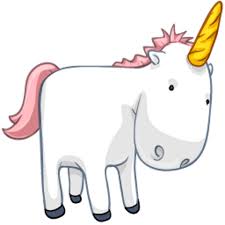
Susan googled the word unicorn. She read about unicorns, of which mostly she knew already. Unicorns are mythical creatures that look like horses with a horn coming out of their foreheads. Unicorns are a beautiful animal, usually described as having great intelligence and a gentle wisdom that humans may not understand. Often the unicorn is a creature of divinity, pure of heart and spirit that may be possessed of incredible powers of both creation and healing.

Susan looked at the clock. There was time for her to start writing her mythical story for the journal assignment before the dismissal bell. This is what Susan wrote:

The Unicorn, a Mythical Creature

Once upon a time, in a land far, far away there lived a unicorn which was often seen galloping atop a tall cliff overlooking the sparkling creek below. Everyone knew that when the moon was full, the unicorn would grace the mountain with its beauty.

The bell rang. Susan grabbed her journal and walked back to class to tell Mr. Christiansen that she made lots of progress. She couldn’t wait to finish writing the story and to read it to the class tomorrow.

“Good night, Susan!” Mr. Christiansen shouted above the noise in the hallway.

“Good night, Mr. Christiansen, see you tomorrow!” Susan smiled and waved.


EXERCISES:

a) Definitions (Write the meaning of each word as it is used in the text.)

1. traditional
2. possessed
3. incredible

b) Answer the following questions

1. According to Susan’s research, who or what are most often the main characters in myths?

2. Why are myths, a traditional story-type, passed on from generation to generation? How are myths usually passed on?

Grammar Last Review


My last post is for you to check what we've learnt.


It has been a pleasure!

See you soon! and keep on studyng English!!!


READING: Authors Tell Different Stories

Many of you have heard a Cinderella story, but what you may not know is that there are over a hundred different ways to tell the Cinderella story. Each of these stories is written by a different author. An author is someone who writes a story.

Let’s look at two authors and how their stories are different. Pay close attention to the stories especially the animals in the story. When writers write about the same thing but tell the story in a different way… that is called their “version” of the story. The story of Cinderella has many different versions.

The version that most people know is the oldest one written in 1697 by Charles Perrault from France. This is the version where the birds help sew Cinderella’s dress and the mice turn into carriage men and help Cinderella go to the ball in the pumpkin that turns into a carriage. In this version, many of the animals are Cinderella’s friends. They help her meet the Prince, who Cinderella marries, and together they live happily ever after.


In another version of this story, written in the 1850s by Jacob and Wilhelm Grimm from Germany, there are birds that help Cinderella throughout the story. Cinderella’s mother is not living at the beginning of the story. She visits her mother’s grave three times a day to say a prayer for her.

Cinderella’s father had given her a twig when he went to the festival. She plants the twig and her tears water the twig until it grows into a tall tree.

The birds now live in the tree and they give Cinderella a dress of gold and silver and slippers that are gold and silver, too. Cinderella goes to the festival to meet and dance with the Prince. Later, he finds Cinderella at home doing work for her stepmother and stepsisters. Cinderella marries the Prince and they live happily ever after.

Now you can understand what the word “version” means and how more than one author can tell a story in a different way. This is also called the “author’s point-of-view”. The story is told from the author’s viewpoint. That is why there are many versions of the same story.


ANSWER THE FOLLOWING QUESTION

1. This story talks about different versions of Cinderella. What is the oldest version mentioned in the story? Who wrote it? When was it written?

2. In Grimm’s version written in the 1850s in Germany, the Cinderella story has Cinderella visit the grave of her mother three times a day. Explain how the twig grows and what the birds do for Cinderella.

3. In fairy tales, there usually is a “happily ever after” ending. Explain one of the endings of the Cinderella story and how this is a “happily ever after” ending.


IMPORTANT: you have to do another exercises that is in the blogg,EXERCISES: Authors Tell Different Stories

EXERCISES: Authors Tell Different Stories